President's Message IDEA Collective - Struggle is Where the Growth Happens
Book Recommendations Educator Opportunities - Celebration of the Write ME project, May 31st, free reception. Scroll for more information.
|
President's Message IDEA Collective - Struggle is Where the Growth Happens
Book Recommendations Educator Opportunities - Celebration of the Write ME project, May 31st, free reception. Scroll for more information.
|
| - MCSTOYA Connects: Migration Reads,Summer read and event, August 11, 2025, at Colby College
- Educate Maine Conference: Every Teacher a Leader, July 30-August 1st @ Colby College
- Summer Educators Institute: Learning Without Limits, June 25-27, @ The UMaine, Orono
- READ ME, Maine Humanities Council's statewide summer reading experience
MCELA Membership |
- MCSTOYA Connects: Migration Reads,Summer read and event, August 11, 2025, at Colby College
- Educate Maine Conference: Every Teacher a Leader, July 30-August 1st @ Colby College
- Summer Educators Institute: Learning Without Limits, June 25-27, @ The UMaine, Orono
- READ ME, Maine Humanities Council's statewide summer reading experience
MCELA Membership |
|
|
| | Author: Patti Forster, NBCT, patti.forster@fivetowns.net, MCELA President, English Teacher Camden HIlls Regional High School, Rockport, Bay Area Writing Project Consultant |
Author: Patti Forster, NBCT, patti.forster@fivetowns.net, MCELA President, English Teacher Camden HIlls Regional High School, Rockport, Bay Area Writing Project Consultant |
I wasn’t going to order any more teacher books this year, but yesterday I did it again. I was watching a Zoom Party with three amazing educator writers: Pooja K. Agarwal, Ph.D. (Associate Professor of Psychology at the Berklee College of Music in Boston (co-author, co-author of one of my favorite teaching books, Powerful Teaching: Unleash the Science of Learning, and editor of a new book, Smart Teaching Stronger Learning: Practical Tips From 10 Cognitive Scientists) Michelle Miller, Ph.D. (Professor of Psychological Sciences at Northern Arizona University and the author of Remembering and Forgetting in the Age of Technology: Teaching, Learning, and the Science of Memory in a Wired World and A Teacher’s Guide to Learning Student Names: Why You Should, Why It’s Hard, How You Can) James Lang, Ph.D. professor of the practice in the Kaneb Center for Teaching Excellence at the University of Notre Dame and emeritus professor of English at Assumption University. Also author of a column on teaching and learning in the Chronicle of Higher Education and the author of six books, most recently Distracted: Why Students Can’t Focus and What You Can Do About It, Small Teaching: Everyday Lessons from the Science of Learning, and Cheating Lessons: Learning from Academic Dishonesty)
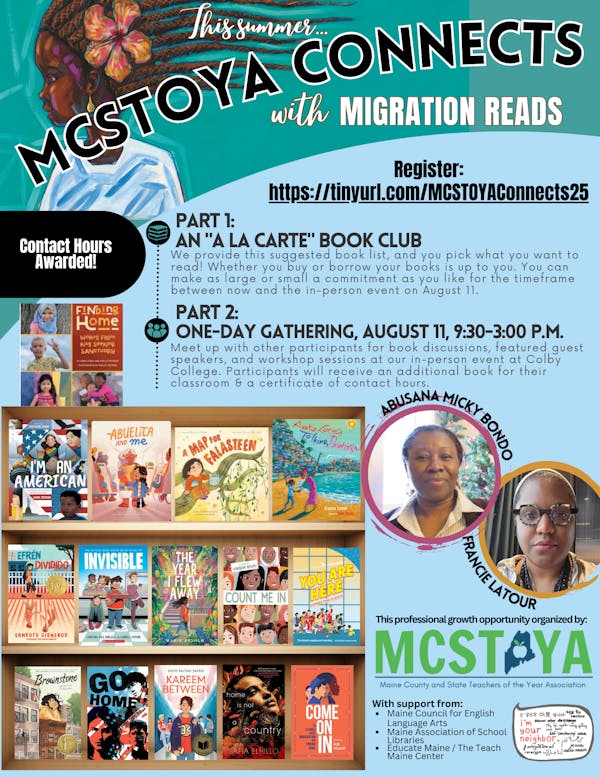
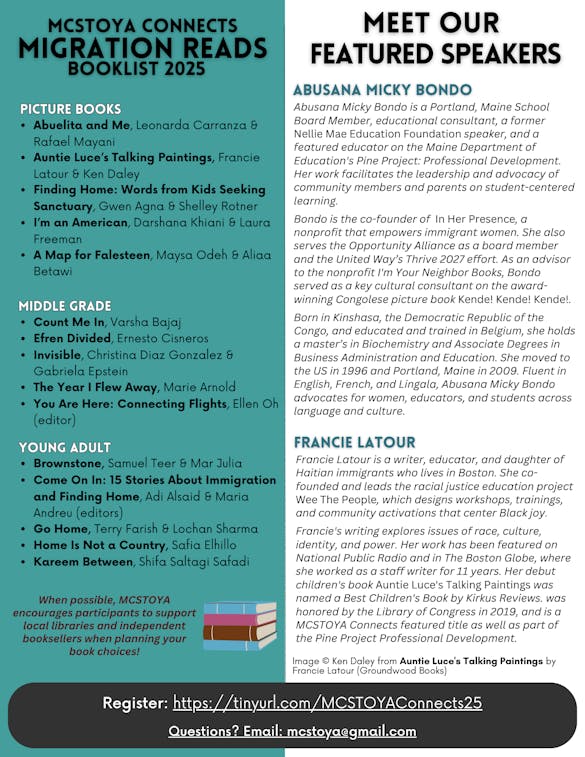
James Lang is one of my favorite educator authors, so I was excited to learn from the video that he has a new book coming out this week: Write Like You Teach: Taking Your Classroom Skills to a Bigger Audience. I almost didn’t buy it, though, because I did tell myself not to buy any more teacher books this year. Luckily, I remembered I had a gift card, so I clicked on the preorder button, and the book will be delivered later this week. In the Zoom Party video, Lang talked about the importance of writing to help us know our craft more deeply. He was speaking about writing a book, but it applies to writing articles, too: Writing a book is the deepest way we can really get to know our discipline and get a really new idea. As you drive yourself into the writing, you really start to open your own thinking. We can get that same thing from our students when we teach a class. We all know that we learn something best when we teach it. [Writing] can be a form of teaching. The kind of slow process of doing it, the research, the wrestling with the words, all those things can really deepen your own learning in a subject matter. I love how he described writing as “a form of teaching” to “deepen our own learning.” It’s true. When I learned the most deeply about improving my teaching was when I wrote for articles for publication. My first was an article on teacher clarity published in the NCTE's English Journal. I was curious about teacher clarity, and working on developing it in my classroom. Writing about it helped me slow down and consider why I was doing what I was doing, and for a research nerd like me, created the opportunity to explore articles and books that supported my teaching choices with evidence. Since then, I've written articles for MCELA's Northwords on a variety of topics, each time, learning more about that topic through my writing. I share these anecdotes with you today to encourage you to consider writing about something you do in your classroom or something you are exploring–to take the opportunity in the last few months of school to increase your knowledge of your discipline by teaching others through your writing. MCELA’s academic journal, Northwords, is the perfect place to publish your writing. We are currently accepting submissions through June 30th for our fall publication. Would you be willing to write to teach us about something you do in your classroom? Click here for more information. This month’s newsletter contains some wonderful summer PD opportunities to continue your learning, as well. We hope you’ll consider joining us with a summer reading program we co-sponsor. It’s called MCSTOYA Connects: Migration Reads. The short version is that you buy or check out from a library one or more of the books on the recommended reading list and read it this summer. Then, join educators at Colby College on August 11th for a day of speakers, workshops, book discussions, and a free bonus book all centered around migration—highlighting experiences of movement, resilience, and belonging. It’s a wonderful event that includes thoughtful discussions, delicious food, and contact hours! Scroll for more information. This summer also includes an amazing new summer conference brought to us by Educate Maine’s Teach Maine Center. I know the folks behind the scenes on this one and am confident they will provide an incredible learning opportunity, including contact hours. Scroll for more information. As we move towards closing out this school year and heading into summer, my hope for all is that you will do what works best for you to rejuvenate and continue learning. Thank you for the opportunity to serve you as the president of MCELA. It has been an honor. Patti Forster |
I wasn’t going to order any more teacher books this year, but yesterday I did it again. I was watching a Zoom Party with three amazing educator writers: Pooja K. Agarwal, Ph.D. (Associate Professor of Psychology at the Berklee College of Music in Boston (co-author, co-author of one of my favorite teaching books, Powerful Teaching: Unleash the Science of Learning, and editor of a new book, Smart Teaching Stronger Learning: Practical Tips From 10 Cognitive Scientists) Michelle Miller, Ph.D. (Professor of Psychological Sciences at Northern Arizona University and the author of Remembering and Forgetting in the Age of Technology: Teaching, Learning, and the Science of Memory in a Wired World and A Teacher’s Guide to Learning Student Names: Why You Should, Why It’s Hard, How You Can) James Lang, Ph.D. professor of the practice in the Kaneb Center for Teaching Excellence at the University of Notre Dame and emeritus professor of English at Assumption University. Also author of a column on teaching and learning in the Chronicle of Higher Education and the author of six books, most recently Distracted: Why Students Can’t Focus and What You Can Do About It, Small Teaching: Everyday Lessons from the Science of Learning, and Cheating Lessons: Learning from Academic Dishonesty)
James Lang is one of my favorite educator authors, so I was excited to learn from the video that he has a new book coming out this week: Write Like You Teach: Taking Your Classroom Skills to a Bigger Audience. I almost didn’t buy it, though, because I did tell myself not to buy any more teacher books this year. Luckily, I remembered I had a gift card, so I clicked on the preorder button, and the book will be delivered later this week. In the Zoom Party video, Lang talked about the importance of writing to help us know our craft more deeply. He was speaking about writing a book, but it applies to writing articles, too: Writing a book is the deepest way we can really get to know our discipline and get a really new idea. As you drive yourself into the writing, you really start to open your own thinking. We can get that same thing from our students when we teach a class. We all know that we learn something best when we teach it. [Writing] can be a form of teaching. The kind of slow process of doing it, the research, the wrestling with the words, all those things can really deepen your own learning in a subject matter. I love how he described writing as “a form of teaching” to “deepen our own learning.” It’s true. When I learned the most deeply about improving my teaching was when I wrote for articles for publication. My first was an article on teacher clarity published in the NCTE's English Journal. I was curious about teacher clarity, and working on developing it in my classroom. Writing about it helped me slow down and consider why I was doing what I was doing, and for a research nerd like me, created the opportunity to explore articles and books that supported my teaching choices with evidence. Since then, I've written articles for MCELA's Northwords on a variety of topics, each time, learning more about that topic through my writing. I share these anecdotes with you today to encourage you to consider writing about something you do in your classroom or something you are exploring–to take the opportunity in the last few months of school to increase your knowledge of your discipline by teaching others through your writing. MCELA’s academic journal, Northwords, is the perfect place to publish your writing. We are currently accepting submissions through June 30th for our fall publication. Would you be willing to write to teach us about something you do in your classroom? Click here for more information. This month’s newsletter contains some wonderful summer PD opportunities to continue your learning, as well. We hope you’ll consider joining us with a summer reading program we co-sponsor. It’s called MCSTOYA Connects: Migration Reads. The short version is that you buy or check out from a library one or more of the books on the recommended reading list and read it this summer. Then, join educators at Colby College on August 11th for a day of speakers, workshops, book discussions, and a free bonus book all centered around migration—highlighting experiences of movement, resilience, and belonging. It’s a wonderful event that includes thoughtful discussions, delicious food, and contact hours! Scroll for more information. This summer also includes an amazing new summer conference brought to us by Educate Maine’s Teach Maine Center. I know the folks behind the scenes on this one and am confident they will provide an incredible learning opportunity, including contact hours. Scroll for more information. As we move towards closing out this school year and heading into summer, my hope for all is that you will do what works best for you to rejuvenate and continue learning. Thank you for the opportunity to serve you as the president of MCELA. It has been an honor. Patti Forster |
| |
|
| | Struggle is Where the Growth Happens |
Struggle is Where the Growth Happens |
Author: Kristina Sanborn. MCELA Executive Board Member, English Teacher at Traip Academy, Kittery. ksanborn@kitteryschools.com |
Author: Kristina Sanborn. MCELA Executive Board Member, English Teacher at Traip Academy, Kittery. ksanborn@kitteryschools.com |
I’m going to let you in on a secret:
After teaching for 12 years, I still question whether or not I am doing a “good” job teaching and if I’ve been bringing in belonging, community, and connection to my lessons. I’ve struggled through moments where students certainly were not honoring each other’s backgrounds, nationalities, sexualities, race, intelligence, etc, enough that I almost said I couldn’t contribute to this newsletter. Then I realized that the struggle is what needs to be shared.
The struggle is where the growth happens. Even if the growth feels slow, I know that each time my students enter my classroom, I am pushing them to challenge their thinking, while also honoring each other’s diverse backgrounds and experiences. I cannot be the only teacher who has a classroom full of boisterous young people who occasionally cross the line with their humor. I know I am not the only person who has had to stop class and have an uncomfortable, but necessary, discussion about why someone’s “joking” comment was hurtful and inappropriate.
Those of us who have taught freshmen in high school know that a first-semester freshman is quite different than a second-semester freshman. First-semester freshmen are like untrained puppies–cute, lovable, but boy, do they try your patience! Then the second semester rolls around, and there is a noticeable change in their maturity and ability to handle the routine of high school. Despite the headache that first-semester freshmen can cause, I adore them. I love helping young people learn to navigate high school.
This year, I was faced with a much different group of freshmen than ever before. I had one of the most diverse groupings in front of me and immediately struggled to build community the “right” way. Gestures, jokes, and innuendos flew around my classroom during the first few weeks of school. I sent students to the office, contacted... |
I’m going to let you in on a secret:
After teaching for 12 years, I still question whether or not I am doing a “good” job teaching and if I’ve been bringing in belonging, community, and connection to my lessons. I’ve struggled through moments where students certainly were not honoring each other’s backgrounds, nationalities, sexualities, race, intelligence, etc, enough that I almost said I couldn’t contribute to this newsletter. Then I realized that the struggle is what needs to be shared.
The struggle is where the growth happens. Even if the growth feels slow, I know that each time my students enter my classroom, I am pushing them to challenge their thinking, while also honoring each other’s diverse backgrounds and experiences. I cannot be the only teacher who has a classroom full of boisterous young people who occasionally cross the line with their humor. I know I am not the only person who has had to stop class and have an uncomfortable, but necessary, discussion about why someone’s “joking” comment was hurtful and inappropriate.
Those of us who have taught freshmen in high school know that a first-semester freshman is quite different than a second-semester freshman. First-semester freshmen are like untrained puppies–cute, lovable, but boy, do they try your patience! Then the second semester rolls around, and there is a noticeable change in their maturity and ability to handle the routine of high school. Despite the headache that first-semester freshmen can cause, I adore them. I love helping young people learn to navigate high school.
This year, I was faced with a much different group of freshmen than ever before. I had one of the most diverse groupings in front of me and immediately struggled to build community the “right” way. Gestures, jokes, and innuendos flew around my classroom during the first few weeks of school. I sent students to the office, contacted... |
| |
|
| Bonus Picture Book Recommendation: |
Bonus Picture Book Recommendation: |
| |
|
Join us this summer for migration reads! Read just one book from our migration reads list this summer and attend our August 11th event. Register now! This event fills fast! Contact Hours Available |
Join us this summer for migration reads! Read just one book from our migration reads list this summer and attend our August 11th event. Register now! This event fills fast! Contact Hours Available |
 |
 |
Join us for an unforgettable conference experience at Colby College for the first Every Teacher a Leader Conference, modeled after past ECET2 gatherings. The conference will feature outstanding Maine teachers who are presenting on: Leading for Relationships Leading for Best Practices
Attendees will also enjoy networking opportunities, engaging entertainment, contact hours, and delicious meals throughout the event. Evening accommodations will be provided in one of Colby’s finest dorms for a comfortable and convenient stay. Plus, expect a few special surprises along the way to make this gathering truly memorable. We have two arrival days: July 30th at 4 pm for those who will be traveling a distance, and July 31st at 8:30 for those closer. The conference will wrap-up at 12:30 on Friday. Cost only $45.00. Review the agenda and make sure to register ASAP. We expect this to fill up quickly! |
Join us for an unforgettable conference experience at Colby College for the first Every Teacher a Leader Conference, modeled after past ECET2 gatherings. The conference will feature outstanding Maine teachers who are presenting on: Leading for Relationships Leading for Best Practices
Attendees will also enjoy networking opportunities, engaging entertainment, contact hours, and delicious meals throughout the event. Evening accommodations will be provided in one of Colby’s finest dorms for a comfortable and convenient stay. Plus, expect a few special surprises along the way to make this gathering truly memorable. We have two arrival days: July 30th at 4 pm for those who will be traveling a distance, and July 31st at 8:30 for those closer. The conference will wrap-up at 12:30 on Friday. Cost only $45.00. Review the agenda and make sure to register ASAP. We expect this to fill up quickly! |
 |
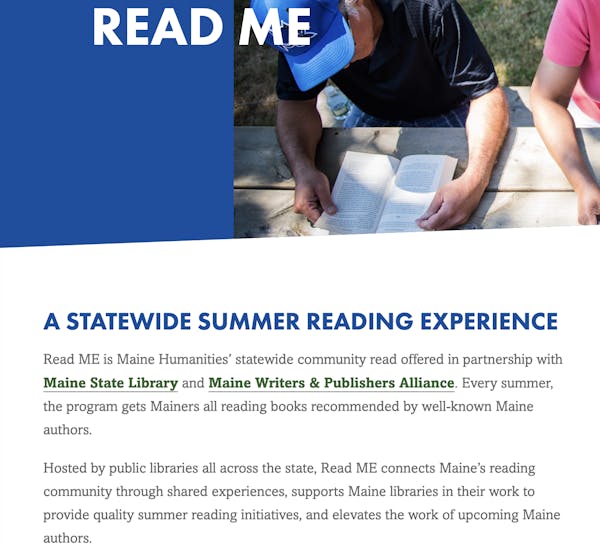 |
The Maine State Library, Maine Writers & Publishers Alliance, and Maine Humanities Council are thrilled to announce the 2025 Read ME featured authors and titles. And, for the first time ever, we have recommendations for both a middle grade novel and a picture book!
For the adult category, recommending author Julia Bouwsma selected:
* The Great Transition by Nick Fuller Googins (fiction)
* American Breakdown by Jennifer Lunden (nonfiction)
For the youth category, recommending author Samara Cole Doyon<https://samaracoledoyon.com/> selected:
* Rostam's Picture-Day Pasteen by Ryan Bani Tahmaseb (picture book)
* Wishing Season by Anica Mrose Rissi (middle grade)
Read ME is structured to enable even the smallest, most rural libraries to participate. All that’s required is a commitment to making the featured titles available to your patrons. As always, toolkits will be available to participating libraries.
To learn more about Read ME and all of this year’s authors:
https://www.mainehumanities.org/programs-grants/read-me/
To register:
https://mainehumanities.formstack.com/forms/readme_registration_2025 |
The Maine State Library, Maine Writers & Publishers Alliance, and Maine Humanities Council are thrilled to announce the 2025 Read ME featured authors and titles. And, for the first time ever, we have recommendations for both a middle grade novel and a picture book!
For the adult category, recommending author Julia Bouwsma selected:
* The Great Transition by Nick Fuller Googins (fiction)
* American Breakdown by Jennifer Lunden (nonfiction)
For the youth category, recommending author Samara Cole Doyon<https://samaracoledoyon.com/> selected:
* Rostam's Picture-Day Pasteen by Ryan Bani Tahmaseb (picture book)
* Wishing Season by Anica Mrose Rissi (middle grade)
Read ME is structured to enable even the smallest, most rural libraries to participate. All that’s required is a commitment to making the featured titles available to your patrons. As always, toolkits will be available to participating libraries.
To learn more about Read ME and all of this year’s authors:
https://www.mainehumanities.org/programs-grants/read-me/
To register:
https://mainehumanities.formstack.com/forms/readme_registration_2025 |
 |
|
|
MCELA is an affiliate of NCTE and 501(c)(3) non-profit organization
dedicated to supporting educators and literacy education in the state of Maine |
MCELA is an affiliate of NCTE and 501(c)(3) non-profit organization
dedicated to supporting educators and literacy education in the state of Maine |
|
|
| |


